
Which Countries Speak French in the World?
Explore the French language and discover the many countries around the world where people speak it today
In this blog post, we’ll take a closer look at the countries where Portuguese is spoken and explore their unique cultures and histories.
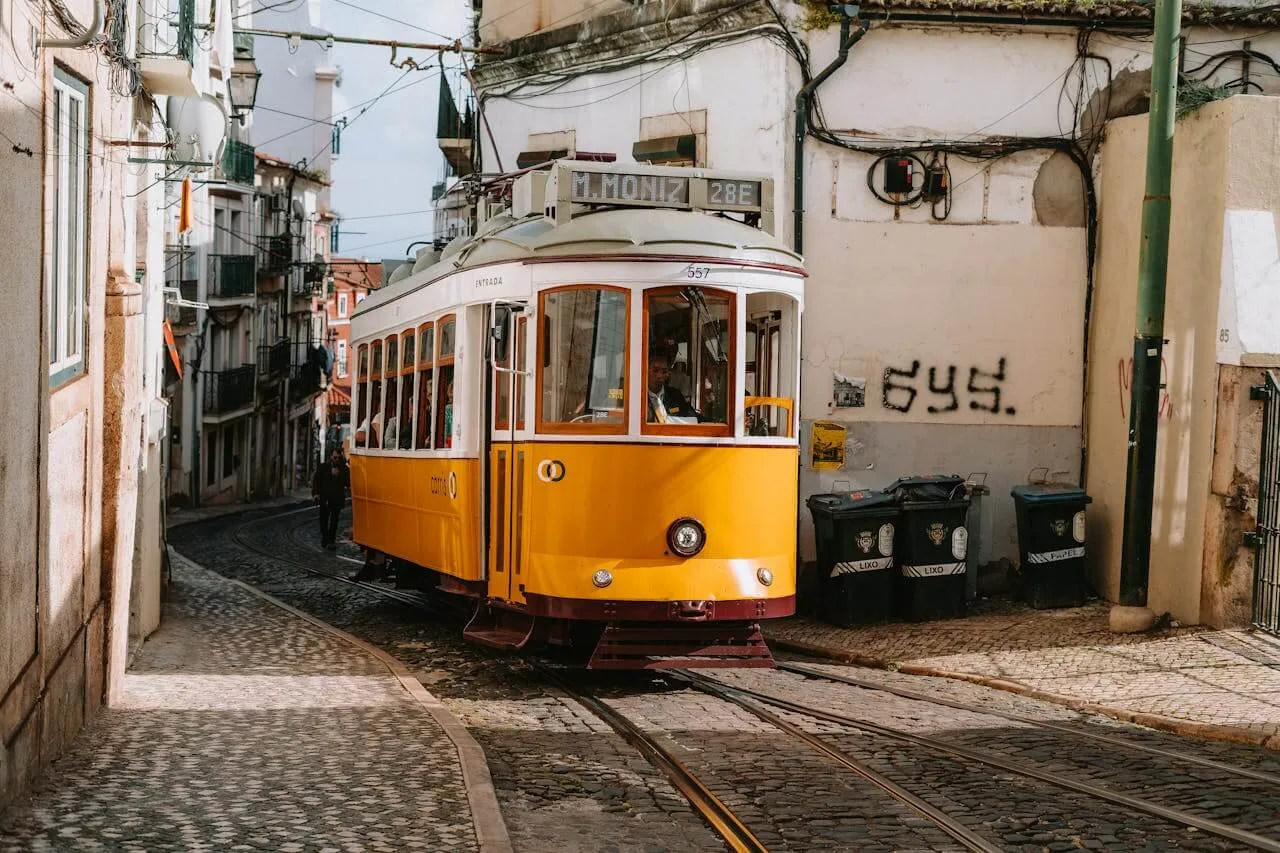
Located in Southern Europe on the Iberian Peninsula, Portugal is the birthplace of the Portuguese language. It is the official language of the country and is often referred to as European Portuguese to distinguish it from the varieties spoken in different parts of the world.
Many people consider Galician, the language spoken in the Spanish region of Galicia, to be a dialect of Portuguese due to the resemblance between the two languages. However, Galician is actually a language of its own, with its own grammar and separate vocabulary.
Located in South America, Brazil is by far the largest Portuguese-speaking country in terms of population, with over 200 million people who speak Portuguese as their native language.
Brazilian Portuguese has its own accent (many accents, to be honest) and characteristics that differentiate it from the Portuguese spoken in Portugal. If you want to learn more about this topic, you can read this article. Interestingly, since Brazil’s population is much bigger than Portugal’s, the majority of films that are dubbed in Portuguese use the Brazilian variety rather than the European one.
Located in Southern Africa, Angola is a country with a history deeply shaped by Portuguese colonization that lasted for over four centuries and ended with the country's independence in 1975. Portuguese remains a unifying factor for the country, and over 70% of the population speaks the language fluently. This is not very common in African countries that were colonized by Europeans, where only the elite are able to speak the language of their former colonizers.
Angolan Portuguese has its own characteristics and vocabulary, often derived from local languages. For example, the word bue means a lot, and it can also be used in Portugal.
For example, bue de pessoas means a lot of people.
Moreover, many Portuguese words used in other countries come from Angola. Examples include samba, the Brazilian dance derived from an Angolan Bantu language, or the word bunda, used in Brazil to mean buttocks. Besides Portuguese, many Angolans also speak indigenous languages. The most common ones are Umbundu and Kikongo.
Mozambique, located on the southeastern coast of Africa, is another country where Portuguese is spoken. Like Angola, Mozambique gained independence from Portugal in the mid-1970s, and Portuguese remains widely used among the population. However, many people also speak local languages such as Xitsonga, Swahili, or Makonde.
Cape Verde is a small island nation in the Atlantic Ocean, off the west coast of Africa, consisting of ten volcanic islands. The country gained independence from Portugal in 1975, and Portuguese remains the official language, although Cape Verdean Creole (Kriolu) is widely spoken in everyday life. Even though it is a Portuguese-based creole, it is difficult for Portuguese native speakers to understand it.
Located in West Africa, Guinea-Bissau is one of the smallest Portuguese-speaking countries. It gained independence from Portugal in 1973, and since then Portuguese has remained the sole official language. However, only the urban elite can actually speak it. The rest of the population communicates in a Portuguese-based creole known as Criolo, or in one of the numerous indigenous languages such as Fulani or Balanta.
São Tomé and Príncipe is an island country off the coast of Central Africa, just below Nigeria. It is the second-smallest African country, with only 200,000 inhabitants.
Almost all of them speak Portuguese, along with a Portuguese creole language known as Forro. One interesting fact about São Tomé is that it was one of the few countries in Africa that was uninhabited before the arrival of the Europeans.
Portuguese is one of the official languages of Equatorial Guinea, but the country does not have a significant Portuguese-speaking population. It adopted Portuguese as an official language largely to be able to join the Community of Portuguese Language Countries (CPLP), for diplomatic and strategic reasons rather than because people actually used it.
East Timor, or Timor-Leste, is an island nation in Southeast Asia and one of the newest members of the Portuguese-speaking world. The country gained independence from Indonesia in 2002 after years of conflict. Portuguese is one of the two official languages of East Timor, alongside Tetum, the national language, which is more widely spoken.
Macau is a Special Administrative Region of China, located on the southern coast near Hong Kong. Once a Portuguese colony, Macau has retained Portuguese as one of its official languages, alongside Cantonese. Nevertheless, less than 1% of the population are native speakers, and only around 2% are able to speak it. Still, Portuguese language and culture remain visible in street names and in the city’s gastronomy.
Goa is an Indian state on the coast of the Arabian Sea. It was once ruled by the Portuguese, but today only about 1% of the inhabitants can speak Portuguese. Goa is more famous for its beautiful beaches and for being a destination for many European tourists. Most of the population speaks Konkani or Marathi, two local Indian languages.
In the city of Malacca, located on the southern coast of Malaysia, there is a very small community of about 2,000 people who speak a Portuguese-based creole language called Kristang. Kristang developed in the 16th century after the Portuguese captured Malacca in 1511. The language formed through contact between Portuguese settlers, local Malay communities, and other Asian trading groups. Therefore, it is heavily influenced by indigenous languages, especially Malay.
Today, this strange but fascinating language is regarded as severely endangered. This means that fewer and fewer people speak it and that it is slowly disappearing.
Portuguese is also spoken by the descendants of Portuguese people who emigrated around the world in the 19th and 20th centuries, particularly in Luxembourg (where more than 100,000 people of Portuguese origin live), France, Andorra, and the northwest of the United States, which has a large community of migrants, especially from the Azores.
In total, around 250 million people from all the countries above are native speakers of Portuguese. In addition, 10 to 20 million more speak it as a second language, making it one of the most spoken languages on the planet.
Altogether, this means that well over a quarter of a billion people speak Portuguese globally. As a result, it ranks among the most widely spoken languages in the world and is one of the major international languages used across multiple continents, including South America, Europe, Africa, and parts of Asia.
In total, there are ten Portuguese-speaking countries in the world. Here’s a summary of all of them with their populations and the approximate percentage of people who actually speak Portuguese:
| Country | Population | % of Portuguese Speakers |
|---|---|---|
| Brazil | 215 million | 98% |
| Portugal | 10.3 million | 99% |
| Angola | 35 million | 70% |
| Mozambique | 33 million | 50% |
| Cape Verde | 0.55 million | 90% |
| Guinea-Bissau | 2 million | 30% |
| São Tomé and Príncipe | 0.2 million | 100% |
| East Timor (Timor-Leste) | 1.5 million | 50% |
| Macau | 0.7 million | 3% |
| Goa (India) | 1.6 million | 1% |
Explore the French language and discover the many countries around the world where people speak it today
Let’s discover where Persian is spoken around the world and explore the countries where this ancient language is still used today
Discover Verlan, a unique slang that is one of the most fascinating features of the French language.
In this blog post, we’ll take a closer look at the countries where German is spoken around the world
Learn some of the most unique, funny, and interesting words you can find in the Italian language